
Table of Contents
ToggleWhat Is Digital Marketing?
Digital marketing is the practice of promoting products, services, or brands using digital channels and technologies, mainly over the internet. It includes activities like advertising on social media, optimizing websites for search engines (SEO), running online ads (PPC), creating engaging content, sending emails to customers, and analyzing data to improve results. The goal is to reach the right audience, increase visibility, and drive sales or engagement in a cost-effective and measurable way.
What Is Digital Marketing? A Complete Guide
Digital Marketing Strategy?
A digital marketing strategy is a planned approach that uses online platforms and digital tools to promote products or services and achieve business goals. It focuses on identifying the target audience, selecting the most effective digital channels such as websites, social media, search engines, email, and online advertising, and creating relevant content to engage customers. The strategy also includes setting clear objectives, allocating budgets, and measuring performance using analytics to improve results. Overall, a digital marketing strategy helps businesses reach the right people at the right time in a cost-effective and measurable way.
Digital Marketing: A Complete Beginner’s Guide
What is Digital Marketing?
Digital marketing is the practice of promoting products or services using online channels such as search engines, social media, email, websites, and mobile apps. Unlike traditional marketing, it’s measurable, interactive, and global.
Key Benefits:
Reach a global audience
Track results in real-time
Cost-effective compared to traditional marketing
Personalized targeting of customers
Core Components of Digital Marketing
Here’s a beginner-friendly breakdown:
A. Search Engine Optimization (SEO)
Goal: Rank higher on Google and other search engines.
Techniques: Keyword research, on-page SEO, backlink building, technical SEO.
Tools: Google Analytics, Google Search Console, SEMrush, Ahrefs.
B. Content Marketing
Goal: Educate, engage, and attract your audience.
Examples: Blogs, videos, infographics, eBooks.
Tip: Create content that solves your audience’s problems.
C. Social Media Marketing
Platforms: Facebook, Instagram, LinkedIn, TikTok, YouTube.
Goal: Build brand awareness, engage with followers, drive traffic.
Best Practices: Post consistently, use hashtags, interact with followers.
D. Email Marketing
Goal: Nurture leads and retain customers.
Tactics: Newsletters, drip campaigns, personalized offers.
Tools: Mailchimp, Klaviyo, HubSpot.
Types of Digital Marketing
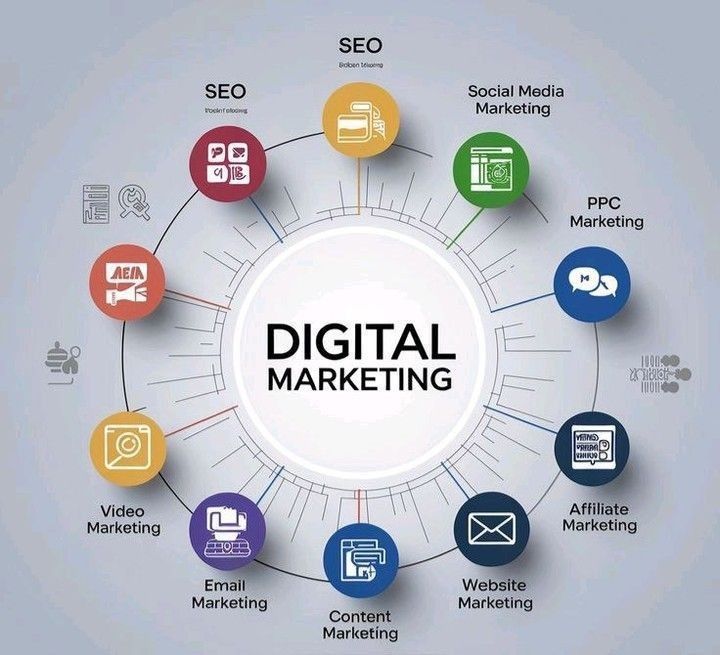
Search Engine Optimization (SEO) – Improving a website to rank higher on search engines like Google and get organic (free) traffic.
Search Engine Marketing (SEM / PPC) – Paid advertising on search engines, such as Google Ads, to drive immediate traffic.
Content Marketing – Creating and sharing valuable content like blogs, videos, infographics, and eBooks to attract and engage customers.
Social Media Marketing – Promoting products or services through platforms like Instagram, Facebook, LinkedIn, TikTok, and X.
Email Marketing – Sending emails to prospects and customers to build relationships, promote offers, and increase retention.
Affiliate Marketing – Partnering with affiliates who promote products and earn a commission for each sale or lead.
Influencer Marketing – Collaborating with influencers to reach their audience and build trust.
Mobile Marketing – Marketing through mobile devices using SMS, apps, push notifications, and mobile ads.
Video Marketing – Using videos on platforms like YouTube and social media to educate, entertain, or promote.
How Digital Marketing Works?
1. Identifying the Target Audience
Digital marketing starts with knowing who you want to reach.
Marketers define:
Age, gender, location
Interests and online behavior
Problems, needs, and buying intent
2. Setting Clear Goals
Before launching any campaign, goals are defined, such as:
Brand awareness
Website traffic
Lead generation
- Sales or app installs
3. Choosing Digital Channels
Different channels serve different purposes:
| Channel | Purpose |
|---|---|
| SEO | Long-term organic traffic |
| Google Ads | Immediate traffic & sales |
| Social Media | Engagement & brand building |
| Customer retention | |
| Content Marketing | Trust & authority |
4. Creating Content & Ads
Content is designed to match the audience and stage of the buyer journey.
Examples:
Blog posts → educate
Social posts → engage
Ads → convert
Emails → retain
5. Traffic Generation
Traffic is driven to:
Websites
Landing pages
Apps
Social profiles
This happens through:
Search engines
Paid ads
Social sharing
Email campaigns

Benefits Of Digital Marketing
Global reach – Businesses can reach customers anywhere in the world through online platforms.
Cost-effective – Digital marketing is usually cheaper than traditional marketing methods.
Targeted audience – Ads and content can be shown to specific groups based on age, interests, location, and behavior.
Measurable results – Performance can be tracked easily using analytics tools.
Higher engagement – Businesses can interact directly with customers through social media, emails, and websites.
Improved brand awareness – Online presence helps build brand visibility and recognition.
Better conversion rates – Personalized marketing increases the chances of turning visitors into customers.