Table of Contents
ToggleWhat Is SEO In Digital Marketing?
SEO (Search Engine Optimization) in digital marketing is the practice of improving a website so it appears higher in search engine results on platforms like Google and Bing. It involves optimizing website content, structure, and technical elements so search engines can easily understand and rank the site for relevant keywords. The main goal of SEO is to increase organic (non-paid) traffic by making the website more visible to people searching for related products, services, or information. By using strategies such as keyword optimization, quality content creation, backlink building, and improving website speed and mobile-friendliness, businesses can attract more visitors, build credibility, and grow their online presence over time.
What is SEO in Digital Marketing Ultimate Guide to SEO for Beginners
1. How Search Engines Work
Search engines follow three main steps:
Crawling – Bots scan websites.
Indexing – Content is stored in a database.
Ranking – Pages are shown based on relevance and quality.
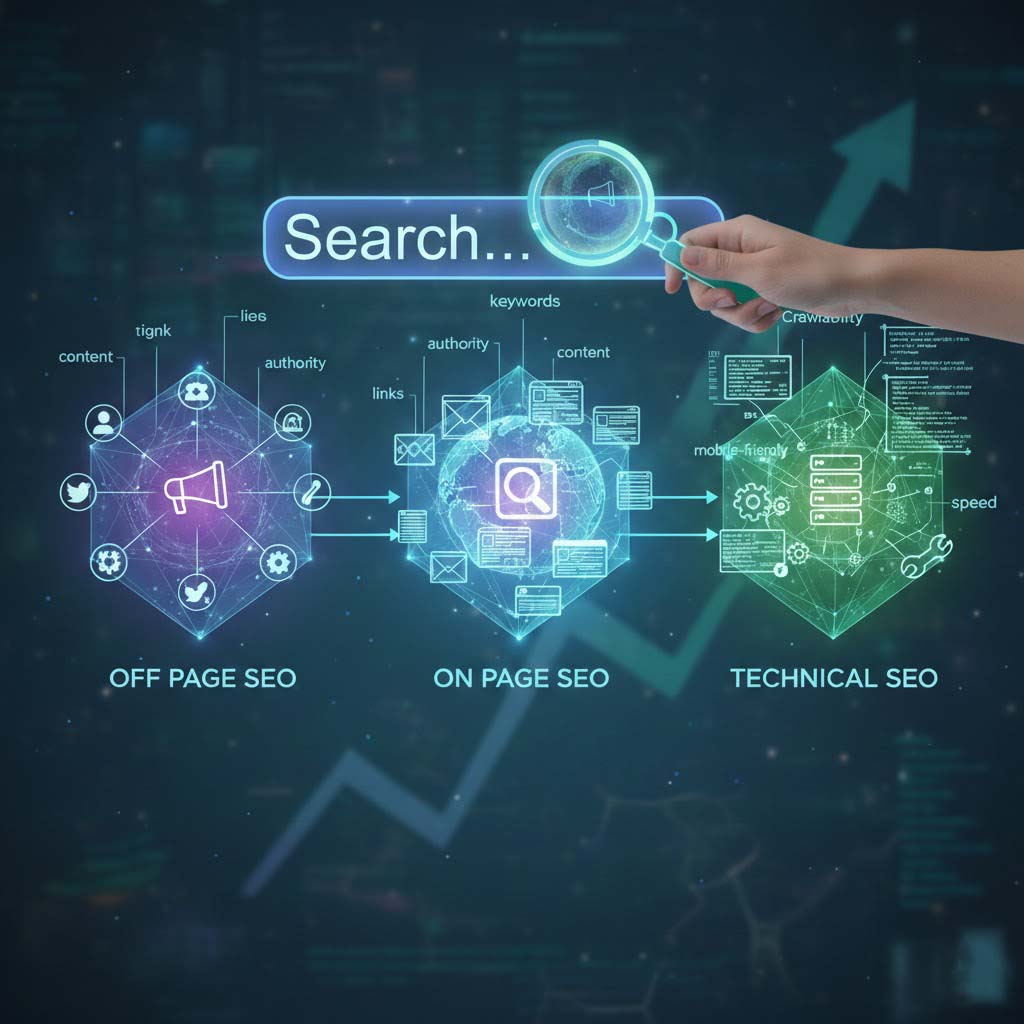
2. Types of SEO
On-Page SEO
Optimizing content on your website:
Using relevant keywords
Writing quality content
Optimizing titles and meta descriptions
Adding internal links
Off-Page SEO
Improving your website’s authority through:
Backlinks (other websites linking to you)
Brand mentions
Social sharing
Technical SEO
Improving the technical performance of your site:
Fast loading speed
Mobile-friendly design
Secure HTTPS connection
Proper site structure
3. Keyword Research
Find out what your audience is searching for and create content around those keywords. Focus on:
Search volume
Competition level
User intent
4. Content is Key
Create helpful, original, and valuable content that answers users’ questions clearly and completely.
5. Why SEO is Important
Increases website traffic
Builds trust and credibility
Improves brand awareness
Generates long-term results without paying for ads
Types Of SEO in Digital Marketing
1. On-Page SEO
Optimization done on your website pages.
Includes:
Keyword research & usage
Title tags & meta descriptions
Headings (H1, H2, etc.)
Content quality & freshness
Internal linking
Image optimization (alt text, size)
URL structure
Goal: Help search engines understand your content and rank it for relevant searches.
2. Off-Page SEO
Actions taken outside your website to build authority and trust.
Includes:
Backlink building
Brand mentions
Guest blogging
Influencer outreach
Social signals (indirect impact)
Goal: Increase domain authority and credibility.
3. Technical SEO
Improving the technical foundation of your website.
Includes:
Site speed optimization
Mobile-friendliness
Crawlability & indexability
XML sitemaps
Robots.txt
HTTPS / security
Structured data (schema markup)
Goal: Make it easy for search engines to crawl and index your site.
4. Local SEO
Optimizing for location-based searches.
Includes:
Google Business Profile optimization
Local citations (NAP consistency)
Local keywords
Reviews & ratings
Local backlinks
Goal: Rank in “near me” and local search results.
5. Content SEO
Focused on creating and optimizing valuable content.
Includes:
Blog posts
Landing pages
Pillar pages & topic clusters
Content optimization for search intent
Goal: Attract and retain users through high-quality, relevant content.
6. Mobile SEO
Optimization specifically for mobile users.
Includes:
Responsive design
Mobile page speed
Mobile UX
Goal: Improve rankings and usability on mobile devices.
7. E-Commerce SEO
SEO tailored for online stores.
Includes:
Product page optimization
Category page SEO
Schema for products & reviews
Duplicate content management
Goal: Increase visibility and sales for products.
8. International SEO
For websites targeting multiple countries or languages.
Includes:
Hreflang tags
Country/language targeting
Localized content
International domain structures
Goal: Rank correctly in different regions and languages.
9. Voice Search SEO
Optimizing content for voice-based searches (Google Assistant, Alexa, Siri)
Includes:
Conversational and natural language keywords
Long-tail and question-based keywords (who, what, where, how)
Local SEO optimization (“near me” searches)
Featured snippet optimization
Fast-loading, mobile-friendly pages
Goal:
To make your website appear as the top result for voice queries, increasing visibility, traffic, and local customer reach.
10. Video SEO
Optimizing videos to rank in search engines and YouTube.
Includes:
Keyword-rich video title
Optimized video description
Relevant tags and categories
Captions and subtitles
Goal:
To improve video rankings, visibility, and audience engagement, driving more views, traffic, and brand awareness.
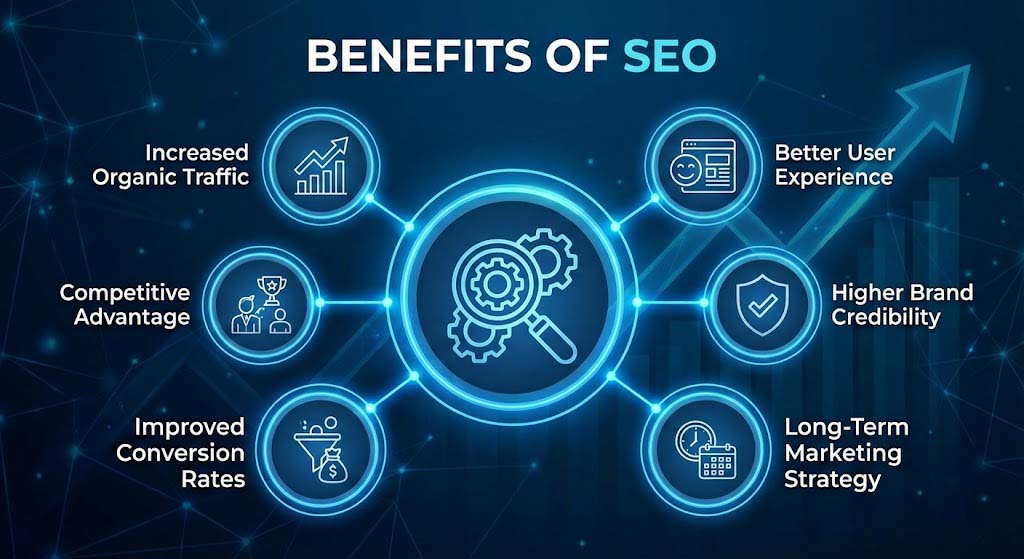
Benefits Of SEO
Search Engine Optimization (SEO) provides many advantages for websites, businesses, and content creators. It helps improve online visibility and attracts the right audience in a cost-effective way.
1. Increases Website Traffic
SEO helps a website rank higher in search engine results. Higher ranking means more users visit the website.
Example:
If a website appears on the first page of Google for “online courses”, more students will click and visit it.
2. Improves Brand Visibility and Awareness
When a website frequently appears in search results, users become familiar with the brand.
Example:
Seeing the same company name repeatedly while searching builds trust and recognition.
3. Cost-Effective Marketing
Unlike paid advertisements, SEO brings organic traffic without paying for each click.
Example:
A blog optimized with SEO continues to get visitors even without spending money on ads.
4. Builds Trust and Credibility
Websites that rank higher are considered more reliable by users.
Example:
Users trust websites on the first page more than those on later pages.
5. Better User Experience
SEO improves website speed, mobile-friendliness, and content quality, making it easier to use.
Example:
A fast-loading, mobile-friendly website keeps users engaged longer.
6. Targets the Right Audience
SEO attracts users who are already searching for related information, products, or services.
Example:
A user searching “best laptop for students” is likely ready to buy.
7. Long-Term Results
SEO provides long-lasting benefits compared to short-term paid ads.
Example:
A well-optimized article can rank and bring traffic for years.
8. Improves Business Growth and Sales
More traffic and trust lead to higher conversions and sales.
Example:
An online store with good SEO gets more customers and higher revenue.
Tools Used For SEO
SEO tools help website owners and digital marketers analyze, optimize, and improve their website’s performance in search engines. These tools support keyword research, website analysis, backlink tracking, content optimization, and performance monitoring.
Why SEO Tools are Used?
-
To find the right keywords with good search volume
-
To analyze competitors’ SEO strategies
-
To track website ranking on search engines
-
To identify technical issues like broken links and slow speed
-
To improve on-page SEO (titles, meta tags, content)
-
To check backlinks and website authority
-
To measure organic traffic and user behavior
-
To monitor SEO performance and progress
Why SEO Matters?
Search Engine Optimization (SEO) matters because it helps websites become more visible and accessible in search engine results, where most users begin their online search. A higher ranking increases organic traffic, meaning more visitors reach the website without paid advertising. SEO also builds trust and credibility, as users tend to trust websites that appear on the first page of search engines. In addition, SEO improves user experience by ensuring fast loading speed, mobile compatibility, and high-quality content. By targeting users who are actively searching for relevant information, products, or services, SEO supports long-term growth and success for websites and businesses in the competitive digital environment.
Key Components of SEO
On-Page SEO
Focuses on optimizing content within the website, including keywords, titles, headings, meta descriptions, images, and internal links.Off-Page SEO
Improves website authority through backlinks from other websites, social media sharing, and online reputation.Technical SEO
Ensures the website is technically optimized, including fast loading speed, mobile-friendliness, secure HTTPS, and proper indexing.